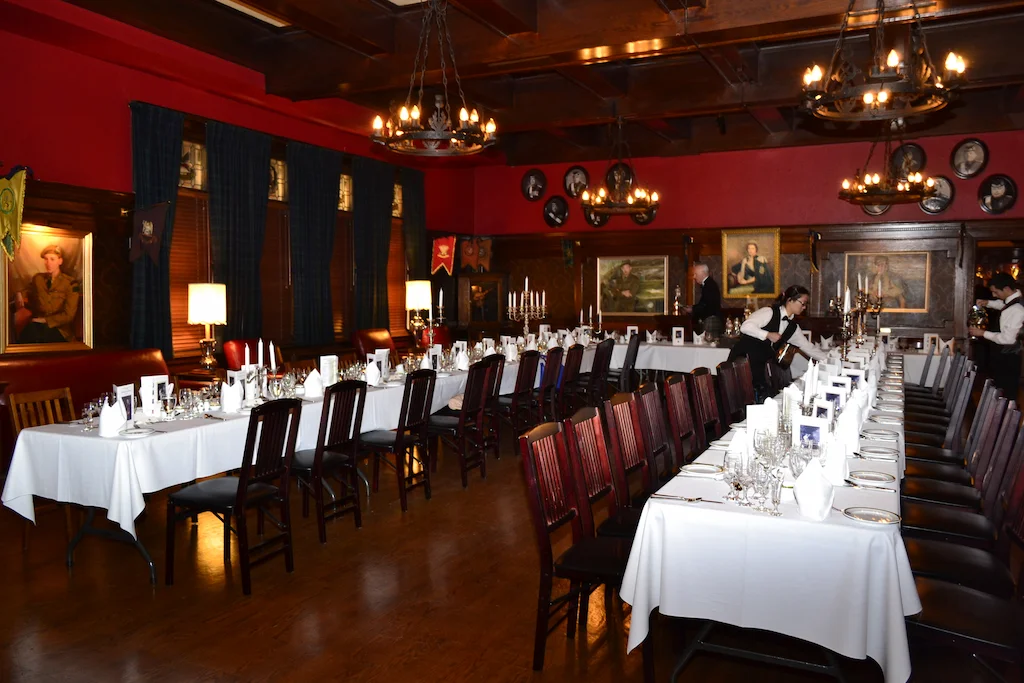
Argyll Officers’ Mess in Hamilton
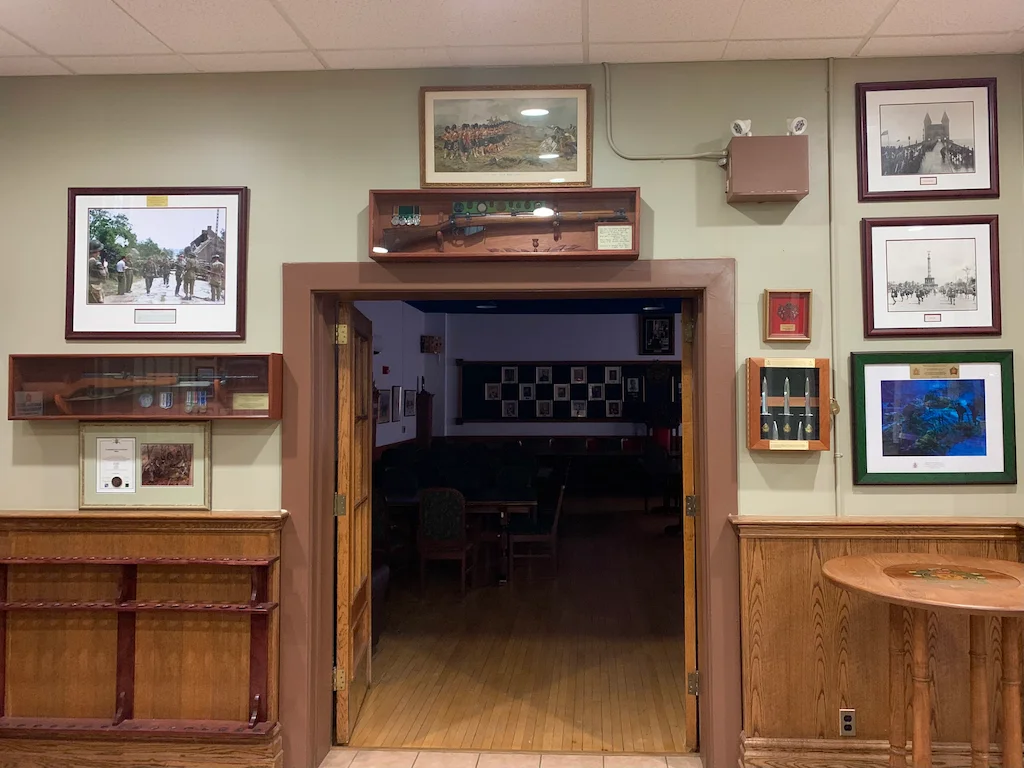
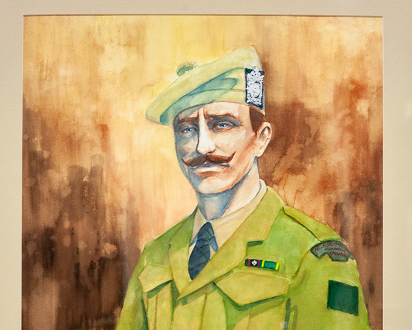
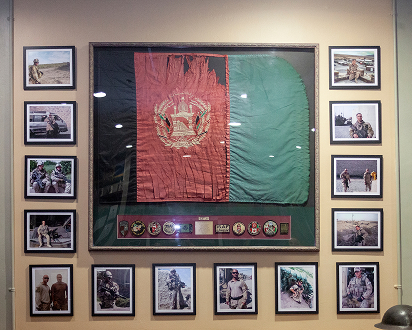
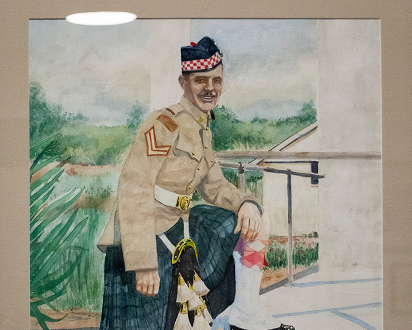
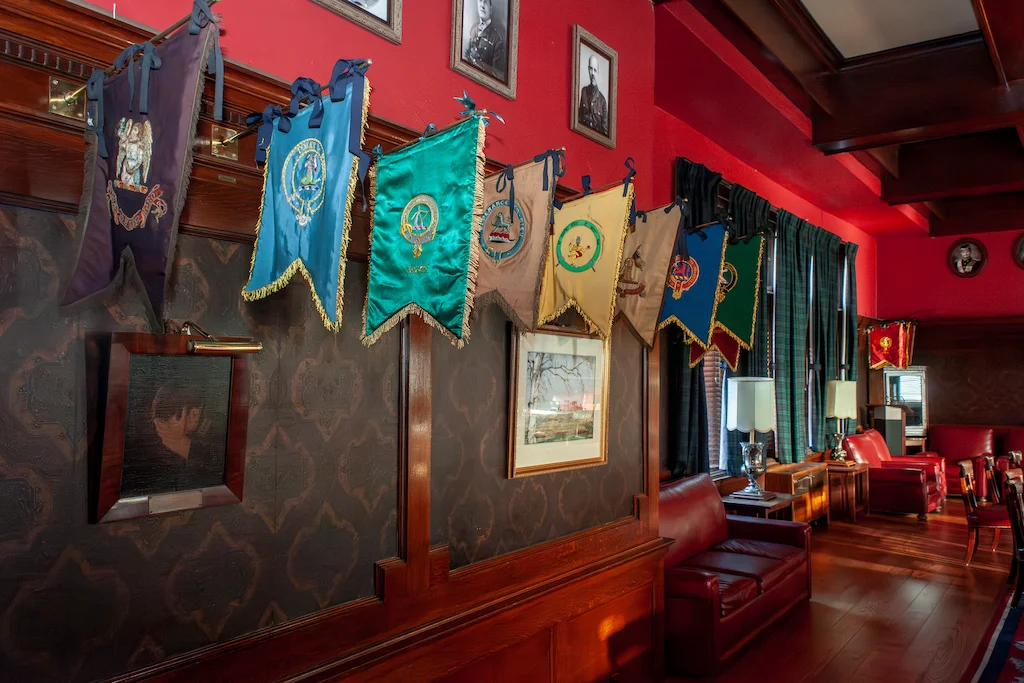
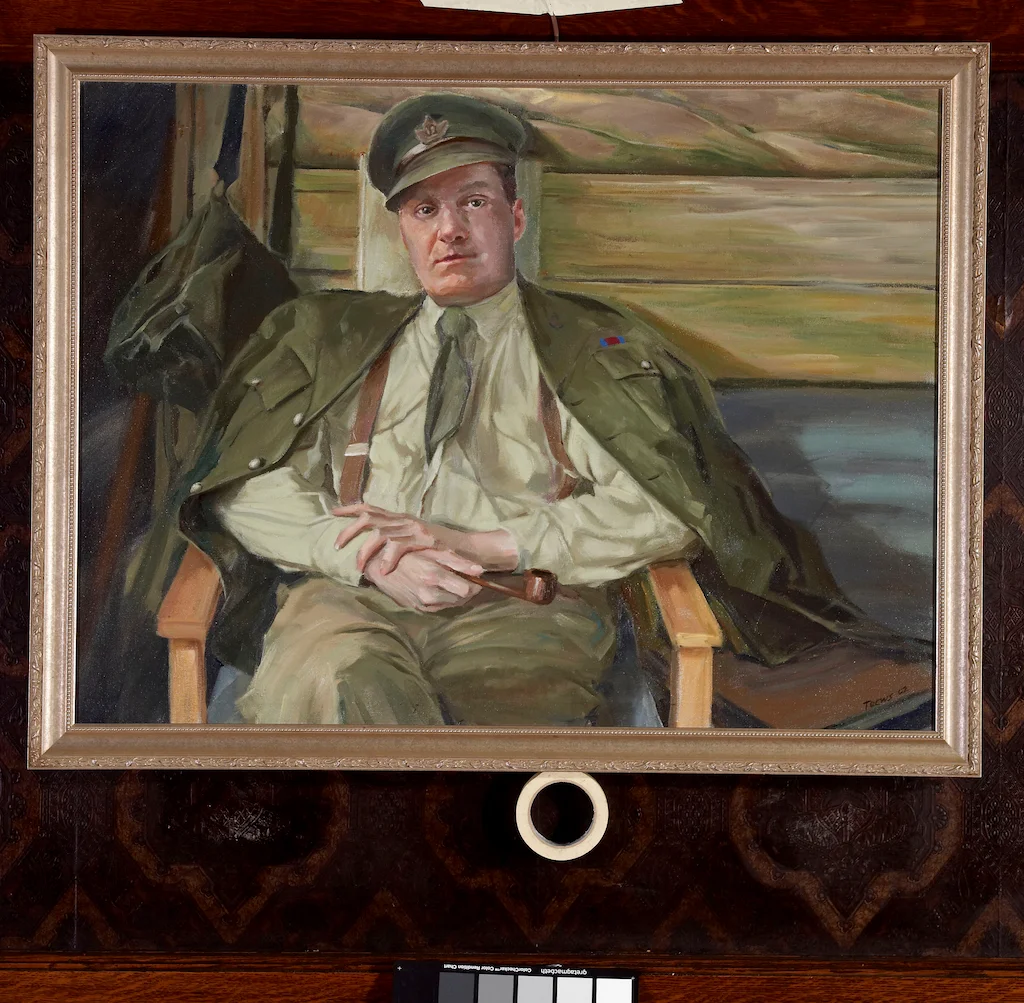
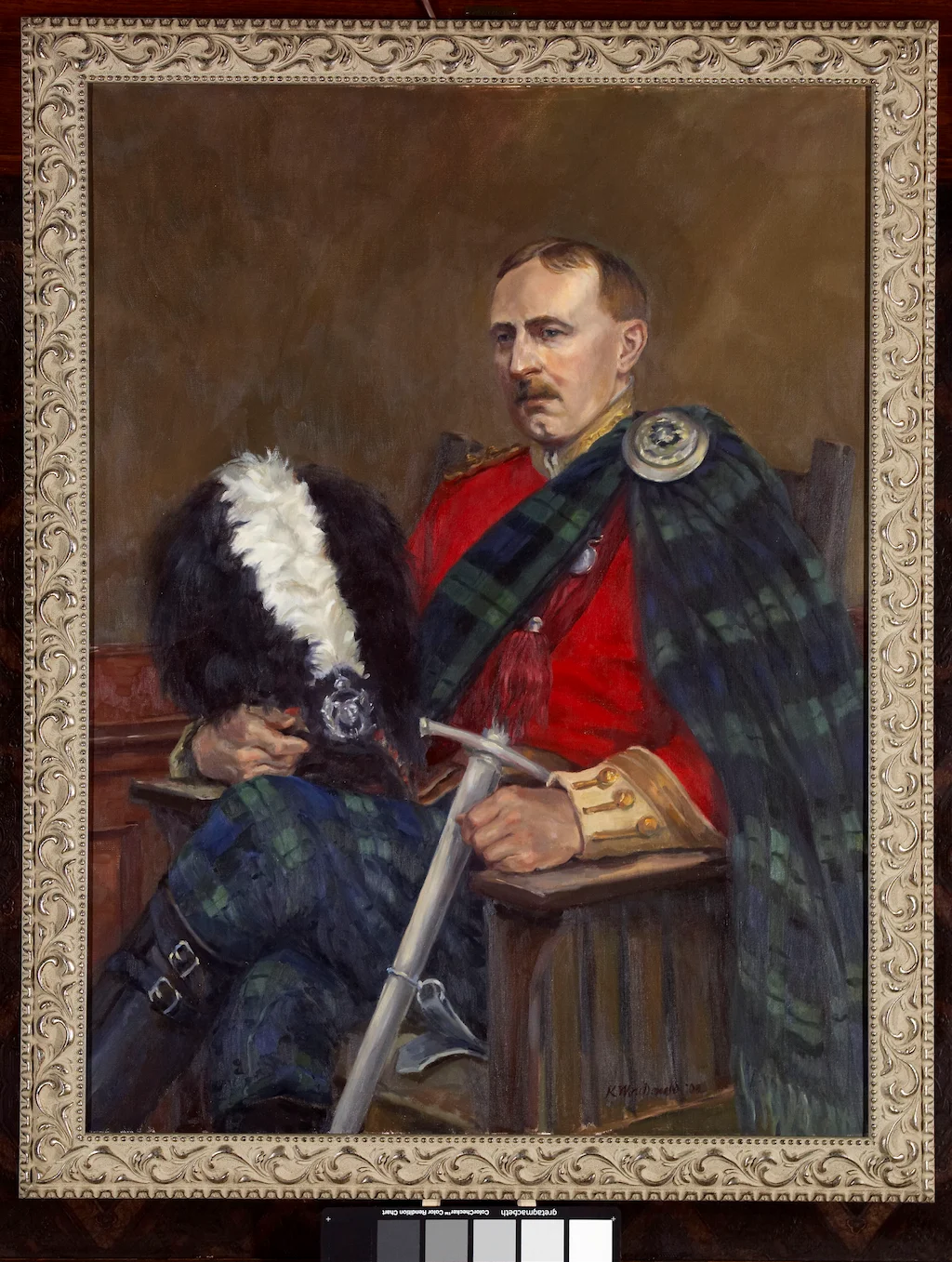
Messes are unique to military life. There is no civilian equivalent. Their purpose is military and touches on crucial elements of military life. They develop and maintain morale, esprit de corps, cohesion, and leadership at all rank levels. They reflect the Regiment’s style, its character, and its culture, maintain Regimental traditions and etiquette, and foster Regimental pride and a sense of belonging. The messes display Regimental art, images, memorabilia, and artifacts. Every Argyll is automatically a member of a mess. Mess life extends from the garrison to the field, and from peacetime to wartime.
The 91st Regiment Canadian Highlanders was established in 1903. The new armoury opened in 1909. It was the good fortune of the Regiment that one of its officers, Capt Walter Wilson Stewart (KIA 1917), a renowned local architect, was appointed the resident architect for the new structure. He ensured that the 91st had spacious mess quarters for the officers and NCOs, and a fine, richly decorated one for the junior ranks (the Rathskeller, which is now the museum for the RHLI) in the basement of the new armoury. The messes of an infantry battalion serve explicit purposes, namely, to build the morale and esprit de corps of the cadres at every level.
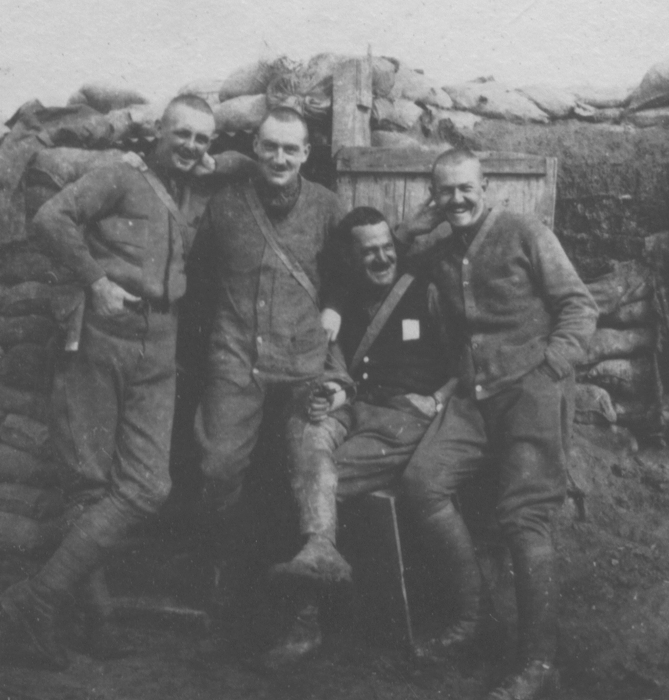
“Nothing like living well when you can.”
— LCol Lionel Millen, DSO, CO, 19th Battalion, CEF
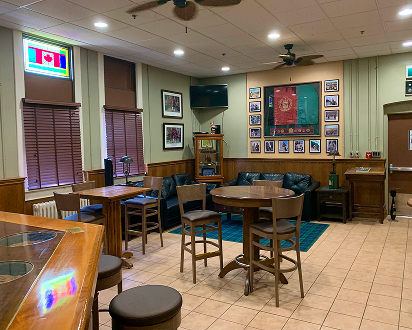
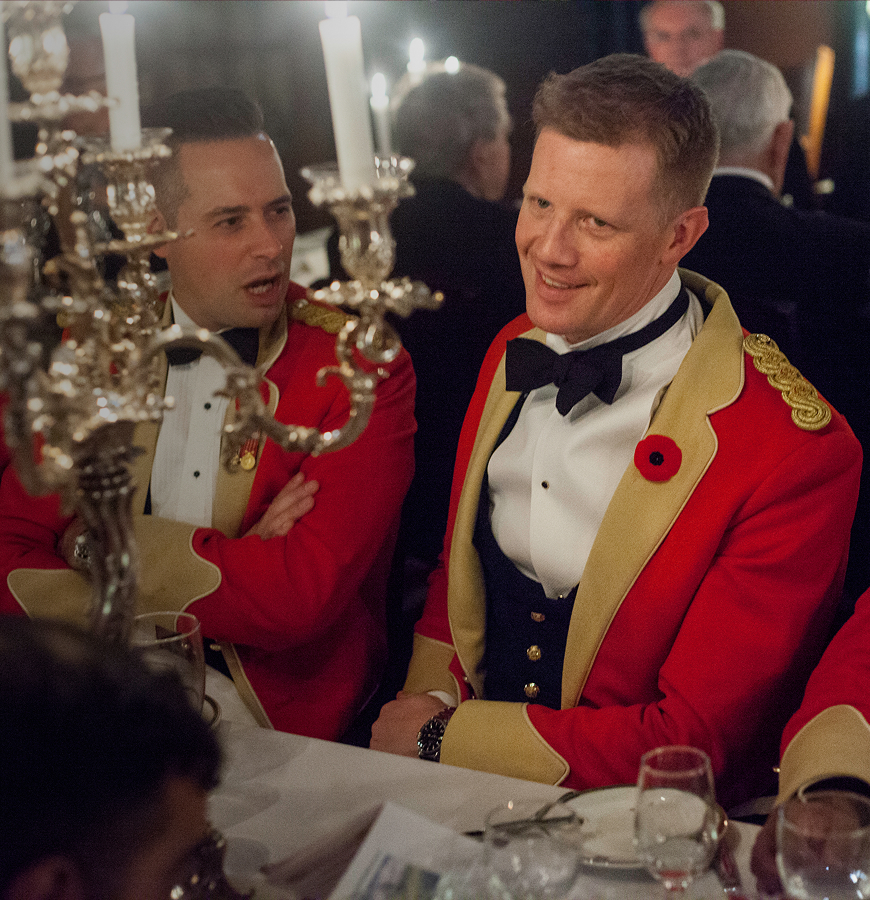
Stewart provided the officers with spacious officers’ quarters that are widely regarded as one of the most beautiful messes in Canada, rich in design, appointments, and spirit. Originally, it included card and billiard rooms as well as lockers; there were bowling alleys and “miniature shooting galleries” in the basement (long since given over to more practical Regimental purposes). The “ladies auxiliary” organized events to raise funds “to completely furnish the mess with the necessary silver, cutlery, china, glassware and linen” (all long since replaced). For military purposes, officers socialize in this Mess and have done so for over 100 years. In August 1914, a group of 91st officers waited in the back room of the Mess for the orders regarding mobilization for war.
Overseas, during the First World War, the 19th Battalion’s officers continued their traditions. At Christmas 1916, the battalion was out of the trenches. The acting CO, Lionel Millen, visited all companies and talked to the troops. That night, the officers held a dinner in the mess, “practically just among ourselves” with very few outsiders.
And this was how the acting CO liked it best:
“For liquid refreshment, don’t be shocked, but what would the dear Women’s Christian Temperance Union ladies think of this. Cocktails, white wine, champagne, liqueurs, whisky…. Now that is some feast.”
Millen revelled in Mess pleasures in a characteristically 91st/19th way:
“We are putting on a little bit of swank too. Our mess Waiter dressed in a white coat with brass buttons. On the sideboard is about everything in the drink line. At meal times, he will say to me, ‘What do you care to drink, sir.’ ‘A sherry and bitters please, Cooper,” or a beer or Scotch + Soda or Collins or the case may be…. Nothing like living well when you can.”
From the First World War onward, Argyll officers carried their traditions overseas and at home, where mess life—marked by camaraderie, style, and a touch of distinction—remained central. Post-war, training at Princess Point and later refurbishments of the mess kept the spirit alive, while the amalgamation of 1936 and the mobilizations of 1940 added new chapters to regimental life. Even in the midst of the heavy losses of 1944, officers upheld the tradition with memorable gatherings that underscored the uncertainty of war. After the Second World War, the mess continued to evolve: hosting Princess Elizabeth in 1951, undergoing significant refurbishments in the 1950s, and later adding the Savard Room in the 1980s to display a remarkable wartime art collection. The tradition of honouring the past while refreshing the space for future generations continued into the 2000s with a major fundraising campaign that modernized and preserved this vital regimental institution.