It was May 1945 and the war in Europe was over. Across the Western
world, jubilant citizens danced in the streets and bells, silent during
the long years of war, pealed their long-awaited declaration of victory
and war’s end.
For the weary victors on the battlefield, there was little rejoicing,
just a relief that the blood-letting had finally ended. Such was
the case for the lst Battalion of The Argyll and Sutherland Highlanders
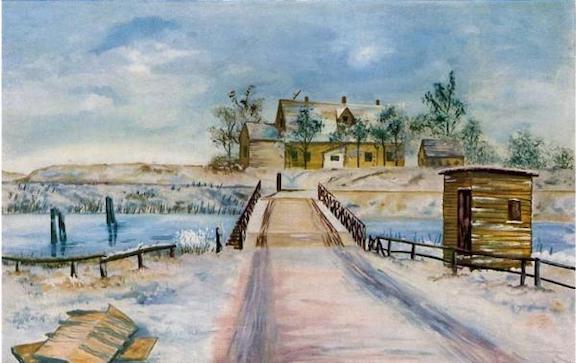
of Canada (Princess Louise’s). This image marked indelibly Maj Bob
Paterson’s personal sense of war’s end. As he had written in Holland in 1945:
Perhaps in the months to come will that fabulous “to-morrow” really be to-day – a day when all the
bells and voices of our great memories shall ring out, cry out, peal,
and shout, in one wild tumultuous song of thanksgiving. Sometime, while
dreaming over a sun drenched lake, while pausing in the fields to watch
the summer clouds pile one upon the other, or in the quiet half hour
before sleep, we shall hear that symphony we once listened for, and it
shall swell and reverberate through our beings in unforgettable strength
and beauty so that we shall know that to-day has come, and that those
black yesterdays are forever left behind.
Here was a phrase – “black
yesterdays” – within a symphonic paragraph that encapsulated the power of
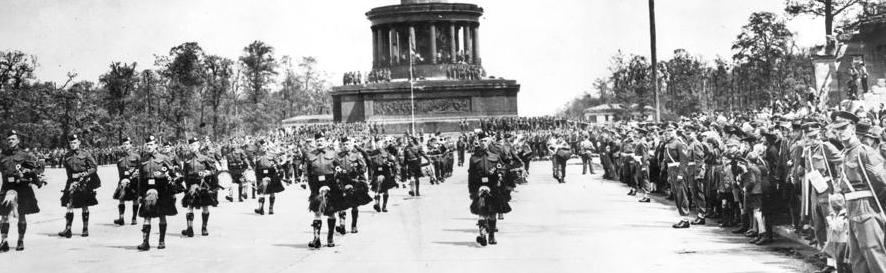
that experience for the Argylls when the firing stopped. In July 1945,
the Argylls, along with its Pipes and Drums, were the largest Canadian
unit (and the command element) in the Canadian Berlin Battalion, which
represented Canada in the British victory celebration in Berlin.
The Argyll record during the campaign in northwest Europe was
distinguished by flair, style, and imagination. The Argylls under the
leadership of Lt-Col Dave Stewart, DSO, have earned the plaudits of
military historians for innovative leadership and courageous execution
of an unorthodox plan in the action at Hill 195 in August 1944. When the
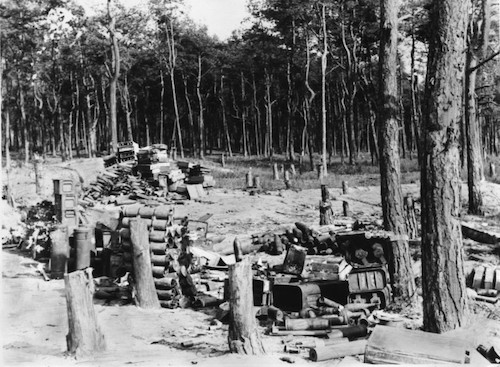
guns fell silent, however, their response was dominated by the dark
shadow of their losses: 285 killed in action and over 800 wounded. As
Capt Sam Chapman once put it, theirs was a history “written in blood.”
Raised in 1903 as the direct result of a remarkable demonstration of
local political organization and the unyielding determination of
Hamilton’s Scottish-Canadian community and organizations, the 91st
Highlanders, later the Argylls, have a history marked by service and
loss. The great symbols of this Highland regiment since 1903 have been kilts and bagpipes, but the hallmark is service to Canada. During the First
World War, the 91st and the battalions it perpetuates saw 1,374 killed
in action and more than triple that number wounded – a history written
in blood. In November 1918, the Pipes and Drums of the 19th Battalion
(our battalion in the First War) played a victorious Canadian Corps
across the Rhine River into Germany.
Yet, there is more to a Regiment than its symbols. At the core of 100
years of service is sacrifice. As Winston Churchill once observed, the
soldier is twice the citizen. Since 1903, thousands and thousands of men
and women from the Hamilton area have devoted several nights weekly and
one weekend or so monthly to train as the army reserve of the
nation’s armed forces. The lure of the profession of arms, a sense of
duty, the intense camaraderie, and the need for extra income explain, in
part or in combination, the attraction to the Regiment. But the militia
soldier’s lot has never been an easy one. It requires a sacrifice of
personal time far beyond most extra-curricular pursuits and a sustained
commitment. The challenge is enormous. The contours of the battalion’s
weekly and seasonal existence is marked mainly by a routine, in varying
combinations over the years, of ceremony, drilling, lectures, training
exercises, administration, and recruiting, to say nothing of the rigours
(and considerable attractions) of mess life and an always full
Regimental social calendar.
Service has always been at the core of this Regiment’s existence. Peace
rather than war has, fortunately, been the norm for most of the
Regiment’s history. For 100 years, scores of dedicated officers and
NCOs have provided the critical cadres so essential to continuity of
effort and maintenance of excellence as the Regiment suffered or
prospered according to the dictates of fluctuating, sometimes wildly so,
government policies. Their dedication has provided the framework for
Argyll service in two world wars, civil emergencies, and the
augmentation by Argylls of UN and NATO deployments overseas. In the
years after the Second World War, there were few opportunities for
overseas service by the militia. There was a small change in the 1980s
when five Argylls served in Cyprus and another three in Germany. The end of the
Cold War and the beginning of problems in the former Yugoslavia meant
new challenges for the Regiment; during the 1990s, 26 Argylls had tours
of duty there while two others served elsewhere in the world. Since 2003,
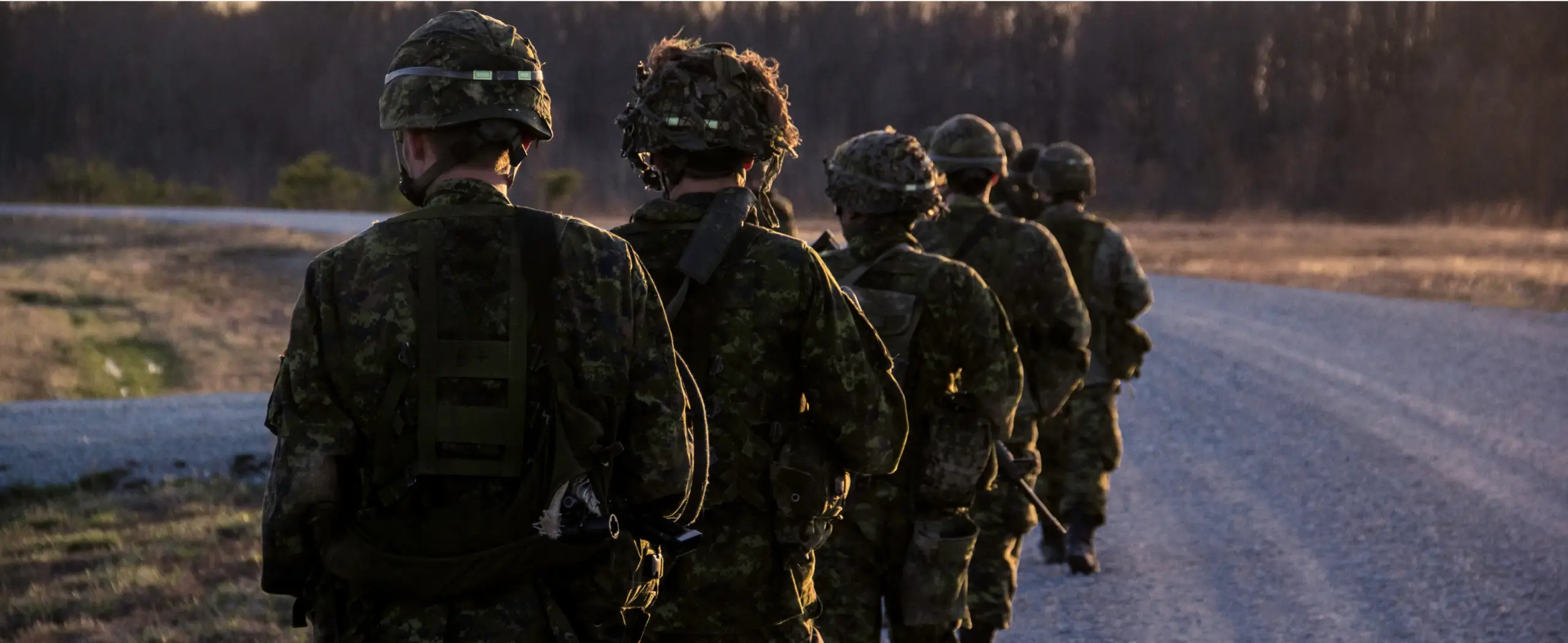
more than 60 Argylls have served in Afghanistan.
The regiment draws its strength from what it is and what it gives to its
sons and daughters. Pte James Farrell, a Second War veteran observed, “In the army … it’s hard to explain – you’re automatically a friend,
you’re one of them. And no matter who you are or what you are – colour,
creed or anything – you are one of them and that’s it.” Tom Kedney,
another private and fellow veteran, described a “fantastic bunch of
fellows.” And when you talk, ‘One for all and all for one’ … I can
honestly say that means for everything they have for their mind, for
their possessions, for everything. And the esprit de corps type of
thing…. I’m certainly glad that I went though it and I’ll never experience
that type of thing again.” The Regiment derives its sustaining power
from this quality, an experience rare in society.
Major Pete Mackenzie, wartime company commander, put it this way: “Later
as you look back, you realize that the cumulative effect of that process
has resulted for each generation in pride of Regiment, a life-long
loyalty and the knowledge that you have lived up to and passed on the
traditions you inherited.” Herein lies the challenge of each new
generation of Argylls – yesterday, today, and tomorrow.